Klaviyo Review India (2026): Pricing, Shopify Integration & Real Testing Results
AT A GLANCE
Klaviyo is a strong ecommerce email platform for Shopify stores, but Indian users should plan for USD billing, a learning curve, and list-based price increases.
Check Klaviyo pricing →Quick Summary
- Klaviyo is purpose-built for ecommerce email marketing, especially Shopify stores.
- The flow builder, segmentation, and Shopify sync are its strongest features.
- Pricing in the tested account started at $20/month USD for 500 active profiles, and it scales as your list grows.
- Billing is in USD only. Indian users should factor in currency conversion costs and possible card fees.
- Best for: Shopify brands focused on retention and lifecycle email marketing.
- Not ideal for: beginners, service businesses, creators, or very early-stage stores with tiny lists.
Who This Review Is For
This review is written for Indian Shopify store owners, ecommerce founders, and marketers who are evaluating Klaviyo as their email marketing platform.
If you are running a D2C brand, managing retention flows, or comparing Klaviyo against tools like Mailchimp, Brevo, or MailerLite, this review covers what actually matters for your situation.
I tested Klaviyo using a trial account connected to the Uprasa store. Screenshots in this review are from that account. Some advanced paid features may appear differently depending on your plan.
What Is Klaviyo?
Klaviyo is an email and SMS marketing platform built specifically for ecommerce businesses. It integrates directly with Shopify, pulls in customer and order data, and uses that data to power segmentation, automated flows, and targeted campaigns.
Unlike general email tools like Mailchimp, Klaviyo is not trying to serve every type of business. It is focused on ecommerce retention: welcome sequences, abandoned cart recovery, post-purchase flows, win-back campaigns, and repeat purchase triggers.
That focus is its biggest strength. It is also what makes it less relevant if you are a freelancer, a service business, or a creator building a newsletter.
Klaviyo Setup Experience
Getting started with Klaviyo takes some orientation time. The platform has a lot of sections: Campaigns, Flows, Website, Social, Audience, Content, Analytics, and Integrations. The navigation can feel overwhelming on the first login.
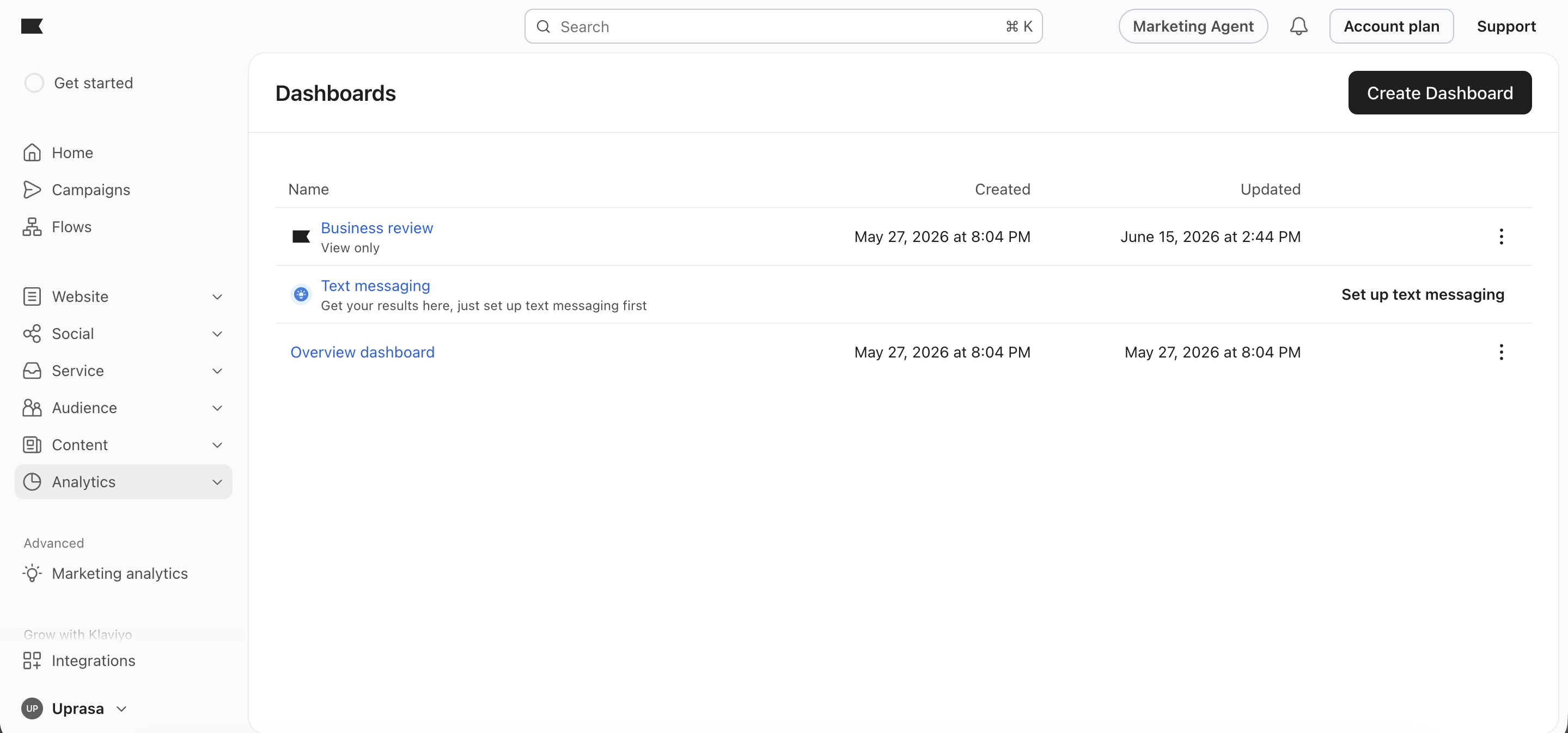
The dashboard home itself is fairly clean. You can see an overview dashboard and a business review section. The “Set up text messaging” prompt is prominent, which makes sense since SMS is a core Klaviyo product, but for email-only setups, you can ignore this.
One thing worth noting: the platform prompts you to set up dashboards manually. It does not show revenue or performance data by default until you configure it. For someone coming from a simpler tool, that first impression can feel blank.
The learning curve is real. Klaviyo rewards users who spend time understanding its logic. If you are used to Mailchimp’s guided setup, Klaviyo will feel more open-ended initially.
Shopify Integration
Klaviyo’s Shopify integration is one of the cleanest in the email marketing space. Connecting is straightforward, and once connected, the sync is bidirectional.
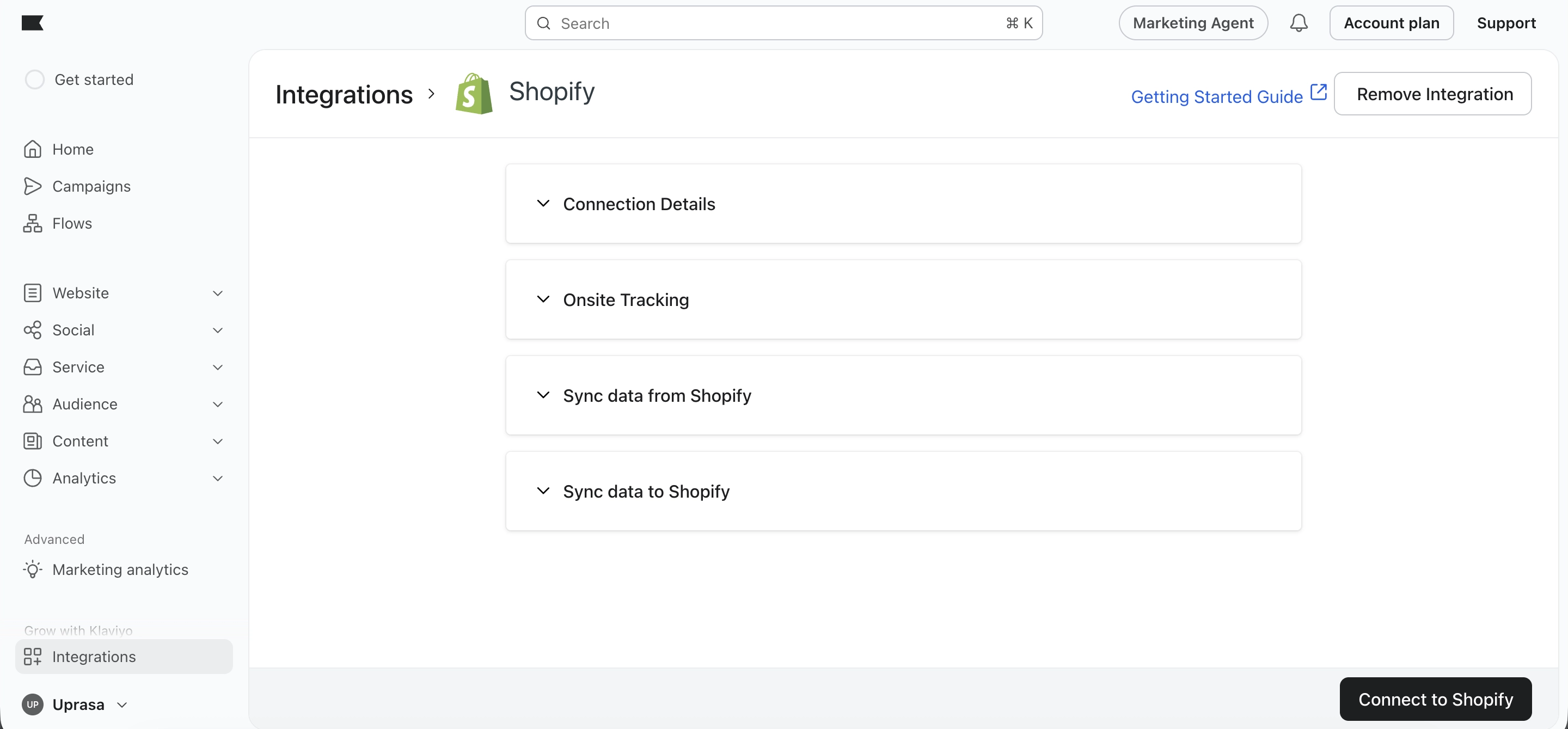
From the integration screen, you can see three active checkmarks:
- Onsite tracking: tracks browse activity on your Shopify store.
- Sync data from Shopify: pulls orders, customers, and products into Klaviyo.
- Sync data to Shopify: pushes data back, which can be useful for customer tags and suppression lists.
This bidirectional sync is what makes Klaviyo powerful for ecommerce. You can trigger flows based on purchase behaviour, segment by product category, and target customers based on order history without manual exports.
For Indian Shopify stores, the integration works the same way. I did not see an India-specific limitation on the Shopify connection itself during this review.
Email Flow Builder
Flows are Klaviyo’s automated email sequences. This is where most of the retention value lives: welcome flows, abandoned cart flows, post-purchase sequences, and win-back campaigns.
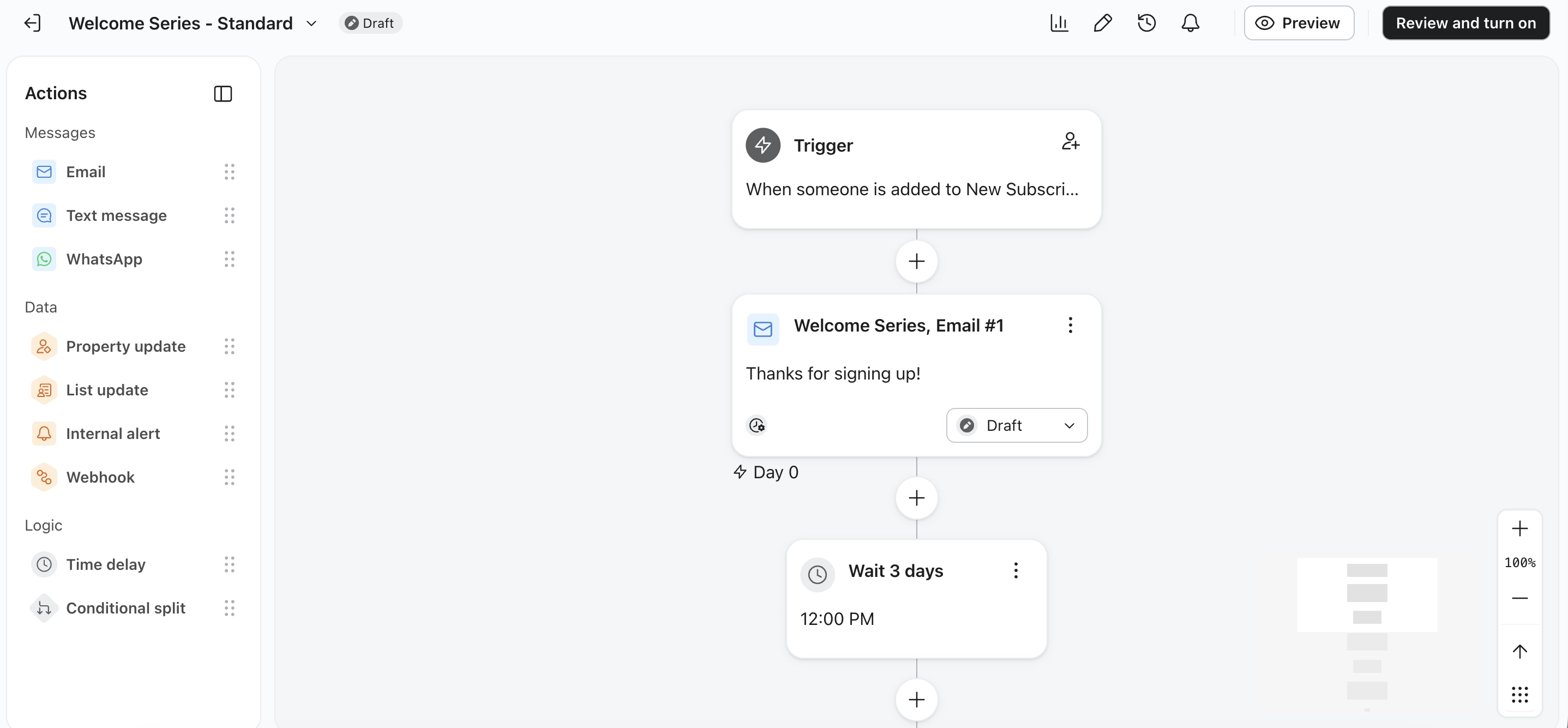
The flow builder is visual and canvas-based. You can see the full sequence at a glance: trigger, actions, time delays, and conditional splits. The sidebar lists what you can add, including Email, Text message, WhatsApp, Property update, List update, Webhook, Time delay, and Conditional split.
The Welcome Series Standard template starts automatically when someone is added to the New Subscribers list. Day 0 fires the first email. A 3-day wait delay follows before the next step.
A few things worth noting from the screenshot:
- WhatsApp is available as a channel inside flows, which is relevant for Indian markets where WhatsApp is widely used.
- Conditional splits let you send different emails based on subscriber behaviour or properties.
- The “Review and turn on” button means you can draft and preview the whole sequence before activating it.
For a Shopify store owner who has never set up automation before, the templates make this approachable. The logic is visual enough that you can understand the sequence without needing technical knowledge.
Email Editor
Klaviyo’s drag-and-drop email editor is flexible and works well for ecommerce emails.
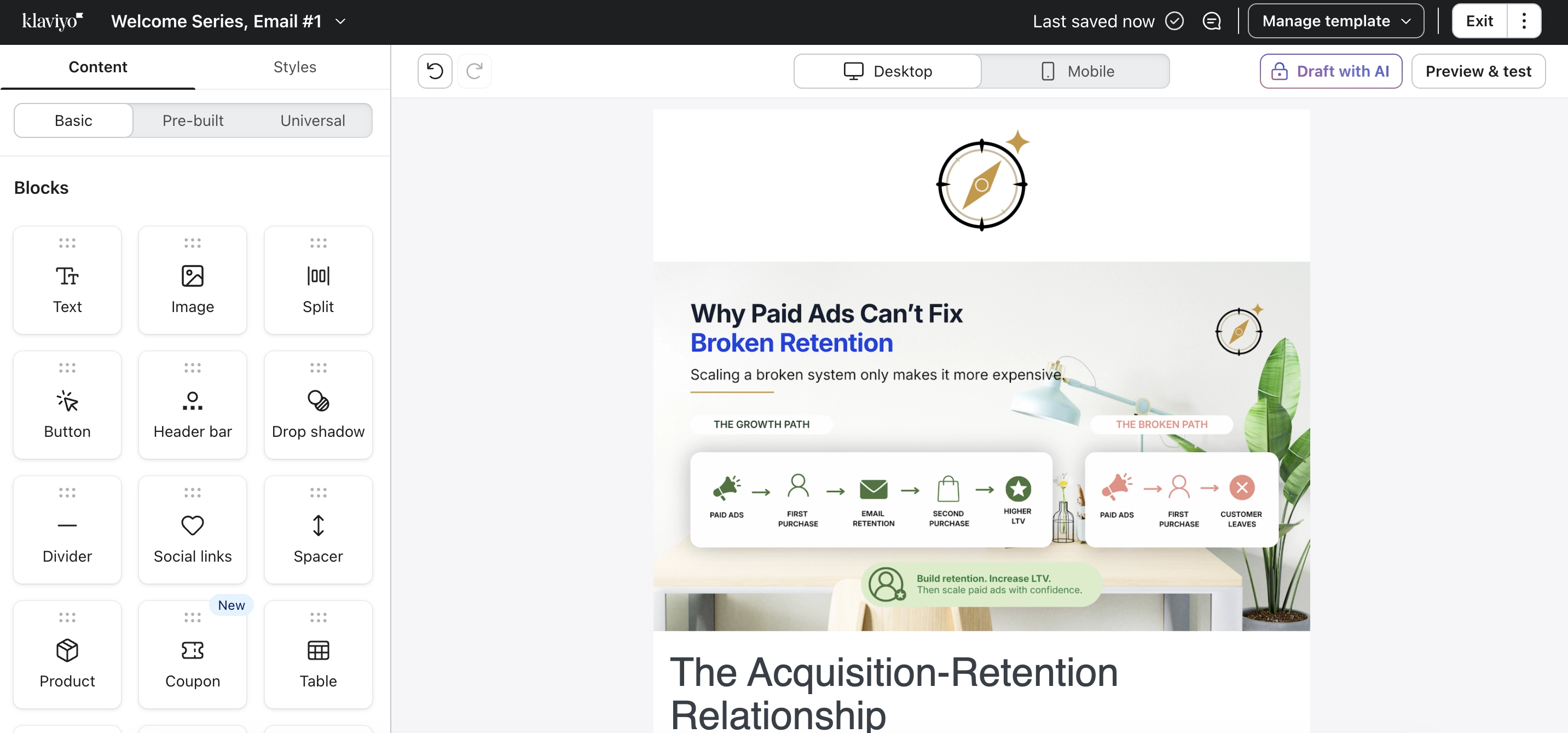
The content blocks panel gives you Text, Image, Split, Button, Header bar, Drop shadow, Divider, Social links, Spacer, Product, Coupon, and Table.
The Product block is particularly useful for ecommerce. You can pull live product data from your Shopify store directly into an email without manually copying images or links.
The editor has a desktop/mobile toggle at the top so you can check how the email renders on both. There is also a “Draft with AI” option if you want to generate a starting draft.
One observation from testing: the editor autosaves continuously. “Last saved now” appears in the header, which is a small but useful detail.
The editor is not the simplest in the market. Tools like Mailchimp or MailerLite have a slightly friendlier editing experience for beginners. But for ecommerce-specific emails that use product blocks and conditional content, Klaviyo’s editor is more capable.
Segmentation
Segmentation is one of Klaviyo’s genuinely strong areas. The ability to create precise audience segments based on purchase behaviour, email engagement, and Shopify data is more advanced than most comparable tools.
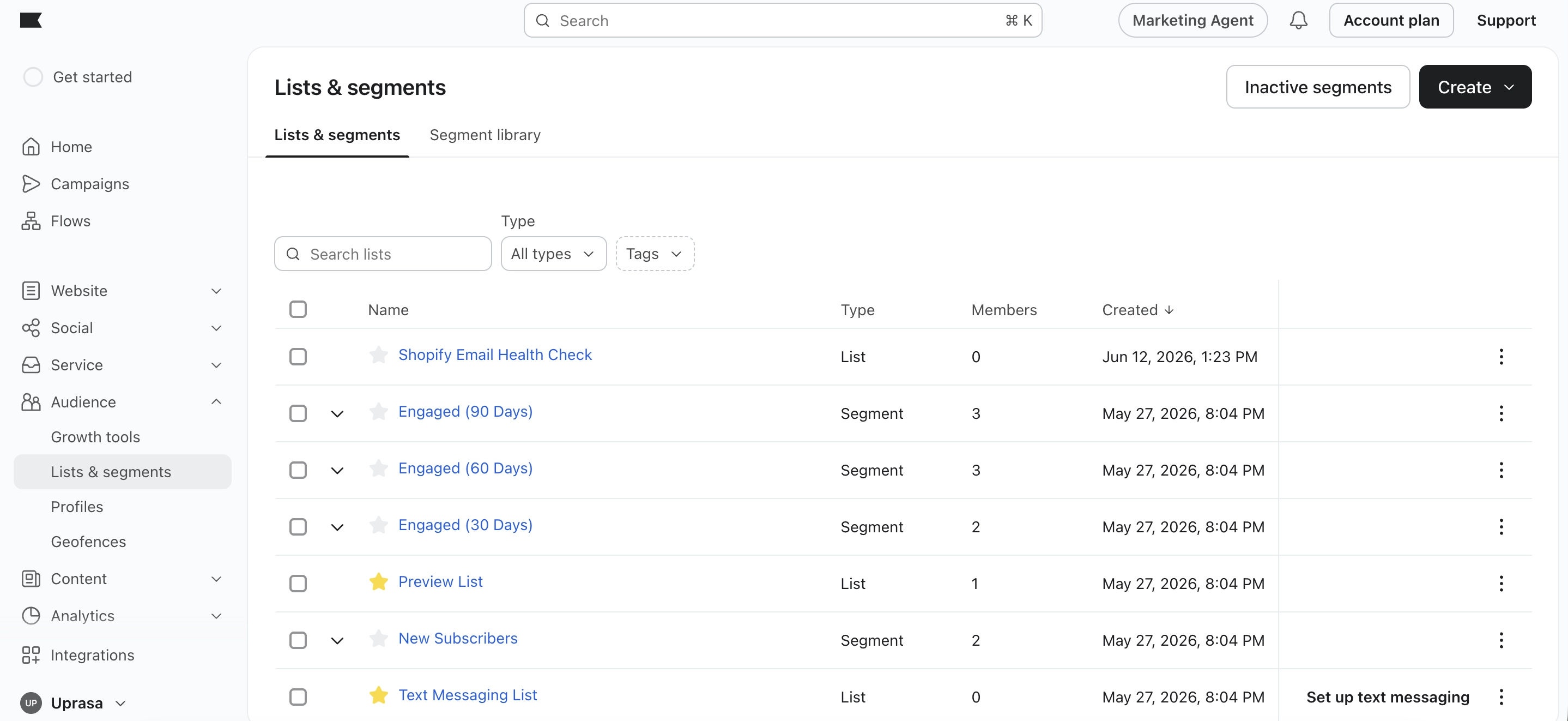
From the screenshot, you can see that Klaviyo creates several pre-built segments automatically:
- Engaged 90/60/30 Days: subscribers who have opened or clicked within those time windows.
- New Subscribers: recent additions to the list.
- Shopify Email Health Check: a list connected to Shopify’s own email health monitoring.
- Preview List: useful for testing emails before a full send.
These pre-built segments are genuinely useful. Most stores can start using them immediately without building custom logic.
Beyond pre-built segments, Klaviyo lets you create custom segments based on purchase history, product viewed, cart abandoned, number of orders, predicted lifetime value, and more. This is where the Shopify data sync earns its value.
The segment builder does require some familiarity with logical conditions. It is not confusing, but it is more involved than a simple tag-based system.
Email Campaigns
Setting up a campaign in Klaviyo follows a clear multi-step process.
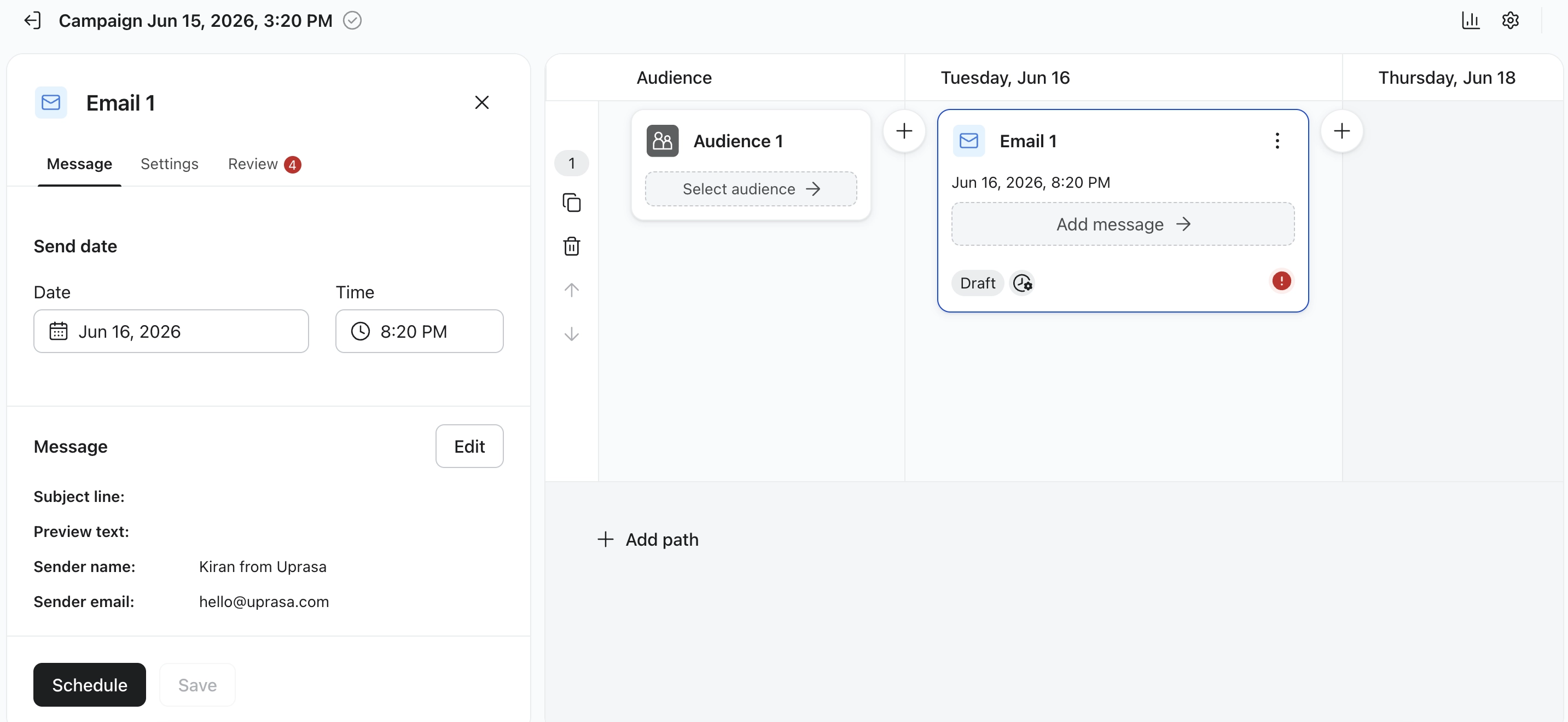
The campaign creation flow breaks into steps: Audience, Message, Review, and Schedule. The scheduling panel lets you pick a specific date and time for the send. The sender name and email are set at the account level and carry through to every campaign.
The “Add path” option visible in the screenshot suggests Klaviyo also supports A/B send paths at the campaign level, where you can split the audience and test different versions.
One thing worth pointing out: Klaviyo prompts you to select your audience before you build your email. This encourages thinking about who you are sending to first, which is good practice, but can slow down users who just want to start writing.
Reporting and Analytics
Klaviyo’s analytics are ecommerce-focused. The overview dashboard tracks email revenue attribution, flow performance, campaign open rates, and click rates.
The platform attributes revenue to email sends. When someone receives an email and makes a purchase within a set attribution window, that revenue is credited to the email. This is useful for understanding which flows and campaigns are driving orders.
That said, revenue attribution in email marketing always comes with caveats. The numbers depend on your attribution window settings and should be read as directional rather than precise.
For Indian Shopify stores, reporting currency can depend on the account and ecommerce setup. If your store operates in INR, check how Klaviyo and Shopify are handling currency before treating revenue reporting as final.
Klaviyo Pricing for Indian Users
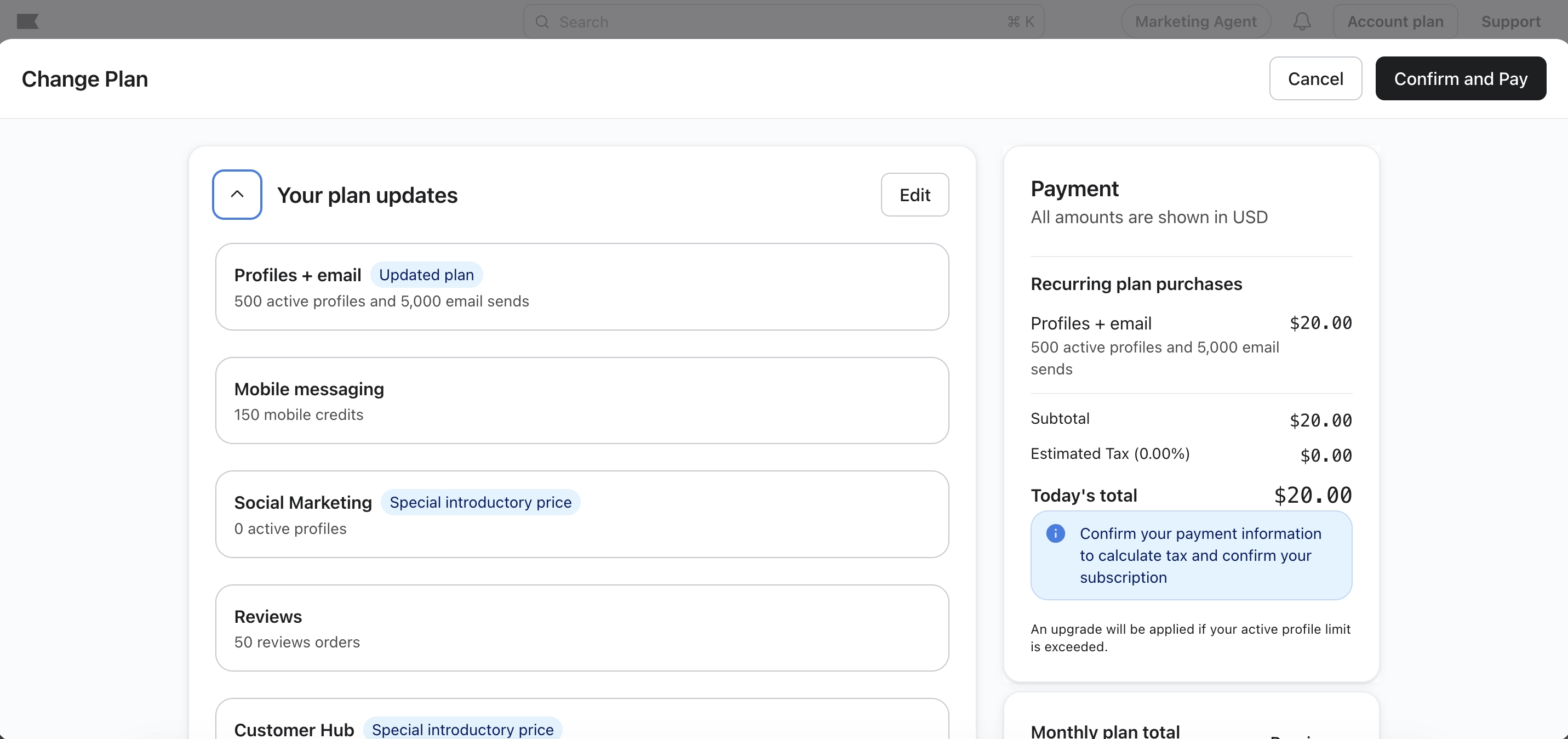
Pricing checked: June 15, 2026. Always verify current pricing at klaviyo.com/pricing because rates and plan details can change.
From the pricing screenshot, the entry-level paid plan shown in the tested account was:
| Plan | Active Profiles | Email Sends | Monthly Price |
|---|---|---|---|
| Profiles + Email | 500 | 5,000 | $20.00 USD |
A few things Indian buyers should know:
Billing is in USD only. I did not see an INR billing option in the tested account. Every charge goes through in USD, which means your bank or card issuer applies a currency conversion rate. Depending on your card, you may also pay a foreign transaction fee.
Tax on the screenshot shows $0. This is likely because it was tested without billing details entered. Once you add your payment method, Klaviyo may calculate applicable taxes. Indian businesses should check the current GST treatment on software subscriptions from foreign vendors with their accountant.
Pricing scales with your active profile count. As your contact list grows past 500, 1,000, 2,500, 5,000, and beyond, the monthly price increases. For a store with 5,000 active profiles, the cost is meaningfully higher than the entry point.
There is a free plan. In the tested pricing context, Klaviyo’s free plan allowed up to 250 active profiles and 500 email sends per month. It is useful for very early-stage stores to test the platform before committing to a paid plan.
For an Indian Shopify store at an early stage, the $20/month starting cost may be manageable. But the cost of running Klaviyo scales faster than many simpler email tools as your list grows, so it is worth planning for.
Pros and Cons
Pros
- Best-in-class Shopify integration with bidirectional sync.
- Visual flow builder with pre-built ecommerce templates.
- Strong segmentation based on purchase behaviour and engagement.
- Product block in the email editor pulls live Shopify data.
- WhatsApp channel available inside flows, which can be useful for India.
- Pre-built engaged segments available immediately.
- Autosave in the editor.
- Revenue attribution reporting built in.
Cons
- Billing in USD only, with no INR option seen in the tested account.
- Pricing scales quickly as your list grows.
- Setup and navigation can be overwhelming for beginners.
- Not well suited for non-ecommerce use cases.
- The dashboard requires manual configuration to show useful data.
- Stronger competitors exist for newsletter and creator use cases.
Who Should Use Klaviyo?
Klaviyo is a strong fit if you:
- Run a Shopify store and want to build proper email retention flows.
- Have at least a few hundred customers and need to segment by purchase behaviour.
- Want automation that goes beyond a basic welcome email.
- Are comfortable with a platform that has a learning curve.
- Can absorb USD pricing and plan for cost increases as your list scales.
It is particularly useful once your store has enough transaction volume for flows like abandoned cart, post-purchase, and win-back to generate meaningful results.
Who Should Avoid Klaviyo?
Klaviyo is probably not the right fit if you:
- Are just starting out with a small or non-existent list.
- Run a service business, freelance practice, or creator newsletter.
- Need INR billing or a straightforward free tier with more send volume.
- Want a simple, beginner-friendly tool with guided setup.
- Are primarily sending newsletters rather than ecommerce sequences.
For those use cases, tools like Mailchimp, MailerLite, or Brevo may be a better starting point.
Klaviyo vs Alternatives
Klaviyo is not the only option for Indian ecommerce stores. The right choice depends on how important Shopify data, automation depth, and pricing are for your business.
| Tool | Best For | Starting Cost | Shopify Focus |
|---|---|---|---|
| Klaviyo | Shopify retention and lifecycle email | Free plan; tested paid plan from $20/month USD | Excellent |
| Mailchimp | Beginners and broader email use cases | Often lower at small list sizes | Moderate |
| Brevo | Budget-conscious stores and general automation | Often lower at entry level | Moderate |
| Omnisend | Ecommerce brands comparing Klaviyo alternatives | Similar ecommerce SaaS pricing model | Strong |
| MailerLite | Small lists, newsletters, and simple automations | Often lower for small accounts | Basic |
For Shopify-heavy retention work, Klaviyo and Omnisend are the most direct competitors. For simpler newsletters, Mailchimp, Brevo, or MailerLite may feel easier and more affordable.
What I Liked Most After Testing Klaviyo
After spending time inside the platform, three things stood out to me.
- The Shopify integration required very little manual setup once the store connection was approved.
- The flow builder made automation logic easy to understand visually, especially for welcome sequences and wait steps.
- The segmentation options were more advanced than most general email tools I have tested.
The biggest drawback was pricing. Klaviyo becomes expensive faster than many alternatives once your active profile count grows.
If I were running a Shopify store with consistent monthly sales, I would seriously consider Klaviyo. For a very small store with limited orders and a tiny list, I would likely start with a lower-cost option and migrate later once retention flows could justify the cost.
Final Verdict
Klaviyo is one of the strongest email marketing platforms available for ecommerce brands, particularly Shopify stores. The Shopify integration, flow builder, and segmentation depth are genuinely strong, and they work together in a way that most general email tools do not replicate.
For Indian Shopify store owners who are serious about email retention, Klaviyo is worth evaluating. The main friction points are USD-only billing, pricing that scales faster than many alternatives, and the setup learning curve.
If you are an early-stage store with a small list, start on the free plan to understand how the platform works before committing. If you are already generating consistent orders and want to build proper lifecycle automation, Klaviyo is one of the stronger options available.
Results from any email platform depend on your list quality, offer, traffic, flow setup, and how consistently you use the tool. Klaviyo gives you strong infrastructure. What you do with it still matters.
About the Reviewer
I work with Shopify email marketing, Klaviyo flows, Mailchimp automation, and ecommerce retention systems. This review is based on direct testing inside a Klaviyo account connected to a Shopify store, combined with practical experience building email automations for small businesses and online stores.
FAQs
Is Klaviyo available in India?
Yes. Klaviyo is accessible to Indian users and works with Indian Shopify stores. However, billing is in USD, not INR.
Does Klaviyo charge in INR?
I did not see an INR billing option in the tested account. As of the June 15, 2026 pricing check, Klaviyo billed in USD, so Indian users should expect their bank or card issuer to apply the relevant conversion rate.
Is Klaviyo free to use?
Klaviyo has a free plan. In the tested pricing context, it allowed up to 250 active profiles and 500 email sends per month. The paid plan shown started at $20/month for 500 active profiles.
Does Klaviyo work with Shopify India stores?
Yes. The Shopify integration supports Indian stores. The setup process is the same as for any Shopify store globally.
Is Klaviyo good for beginners?
It has a learning curve. Klaviyo is more powerful than beginner tools, but that power comes with complexity. If you are new to email marketing, plan time to explore the platform before going live.
What is the difference between Klaviyo flows and campaigns?
Flows are automated sequences triggered by subscriber behaviour, such as joining a list, abandoning a cart, or making a purchase. Campaigns are one-time sends you schedule manually, like a promotional email or newsletter.
Can I use Klaviyo for WhatsApp marketing in India?
Klaviyo showed WhatsApp as a channel inside flows in the tested account. Availability and setup may depend on your account configuration, region, and plan.
Key Takeaways
- Klaviyo is built for ecommerce. The Shopify integration, flow builder, and segmentation work together well.
- The tested pricing screen showed $20/month USD for 500 active profiles with 5,000 email sends.
- I did not see INR billing in the tested account, so Indian users should plan for USD charges and currency conversion.
- A free plan is available for small accounts, but limits are low.
- Klaviyo is best suited for Shopify stores with active customer lists that want to build retention automation.
- It is not ideal for beginners, creators, or non-ecommerce businesses.
- Pricing scales as your list grows, so factor this into your planning.
Review Method
This review is based on hands-on testing in a Klaviyo trial account connected to the Uprasa store, including the dashboard, Shopify integration, flow builder, email editor, segments, campaign setup, and pricing screen. Screenshots were captured from that account on June 15, 2026. Pricing and feature availability can change, so verify current plan details before buying.
Related Guides
- My Shopify Email Segmentation Strategy
- Shopify Email Audit: What I Check First
- How to Improve Klaviyo Welcome Flow Performance
- How to A/B Test Klaviyo Subject Lines
Written by Kiran Daparthi, who works with ecommerce email marketing, Klaviyo, Shopify email flows, and practical email automation setups for small businesses and online stores.
Pricing verified: June 15, 2026. Pricing and features may change. Always check the official Klaviyo pricing page before making a purchase decision.

Related reviews

Best Email Marketing Software for Contractors (2026)
A practical comparison of Mailchimp, Constant Contact, Brevo, MailerLite, Kit, and field service marketing tools for contractors.
Best Email Marketing Software for Hair Salons & Spas (2026)
A practical comparison of Mailchimp, Constant Contact, Brevo, MailerLite, Kit, and booking-software marketing tools for salons and spas.
Best Email Marketing Software for Restaurants (2026)
A practical comparison of Mailchimp, Constant Contact, Brevo, MailerLite, Kit, and Toast Marketing for restaurant email marketing.