Ecommerce Email Marketing Strategy Guide (2026)
AT A GLANCE
The goal is not to send more emails. The goal is to build a system that compounds customer lifetime value over time.
Quick Summary
- Most ecommerce brands have an email marketing setup. Very few have an email marketing system.
- The highest-leverage email work usually happens in flows, not campaigns. Campaigns create visibility; flows create ongoing revenue opportunities.
- Deliverability is the silent variable that determines whether any of the strategy works.
- Segmentation determines relevance. Relevance determines engagement. Engagement determines long-term list health.
- Email is a retention channel first. It is most valuable when it extends customer lifetime value, not when it substitutes for paid acquisition.
Who This Guide Is For
This guide is designed for:
- Shopify store owners
- Ecommerce marketers
- Klaviyo users
- Retention marketing teams
- Agencies managing ecommerce email programs
If your email marketing currently consists of a few campaigns and a basic welcome flow, this guide will help you build a more complete retention system.
Introduction
Most Shopify brands have email marketing. Most do not have an email marketing strategy.
There is a difference. Having email marketing means a welcome flow is live, a campaign goes out when there is a sale, and Klaviyo is connected to the store. That covers the basics. It does not compound.
A strategy means understanding which emails drive which outcomes, which subscriber segments need different messaging, how flows and campaigns interact, and what the system is trying to accomplish beyond the next send. It means treating email as retention infrastructure, not just a broadcast channel.
This guide covers ecommerce email marketing strategy for 2026 as a framework for brands that are past the basics and want to build a system that improves over time.
Ecommerce Email Marketing Framework
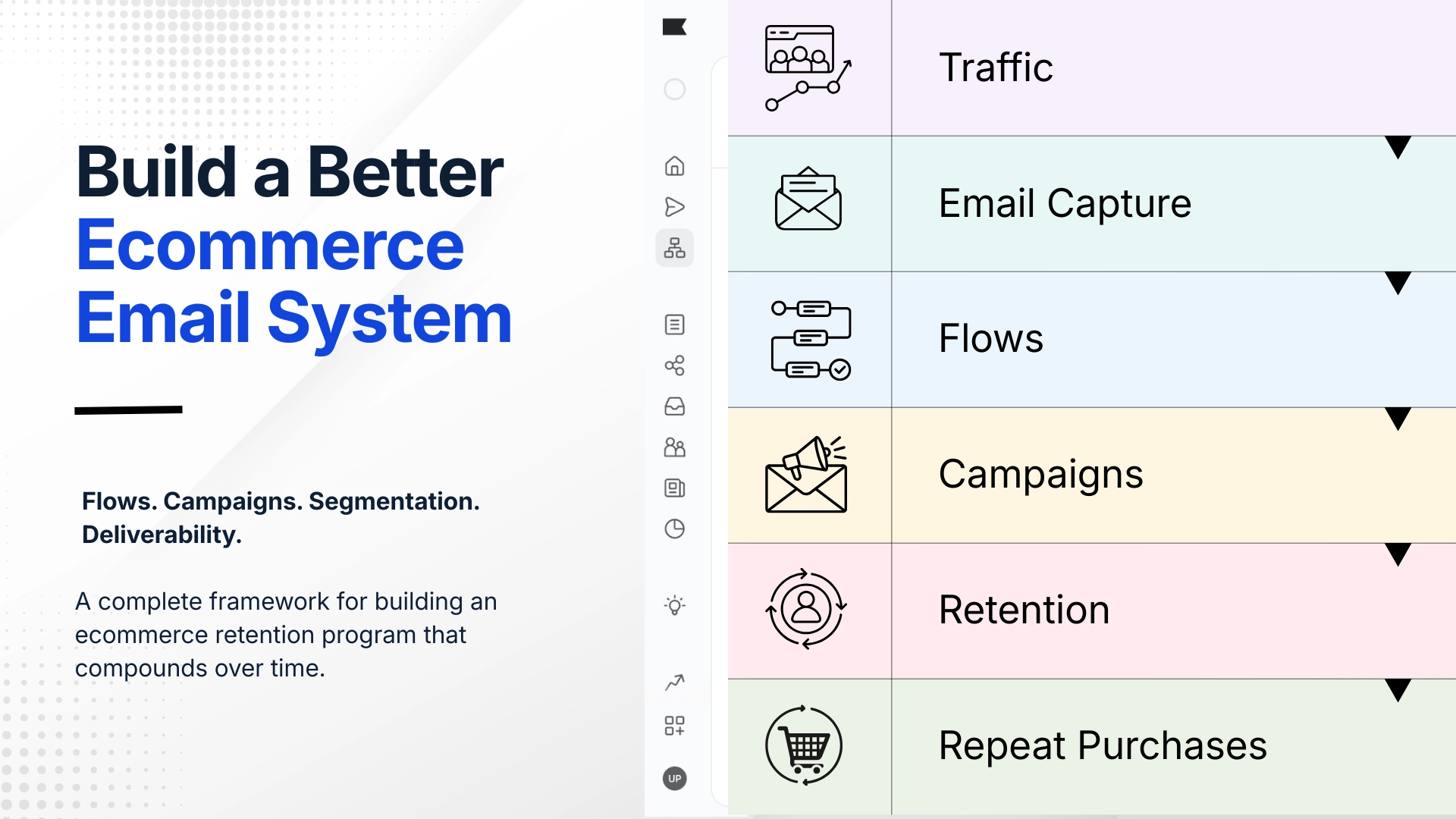
Every successful ecommerce email program consists of five connected systems.
| Traffic |
| Email Capture |
| Flows |
| Campaigns |
| Retention and Repeat Purchases |
If one of these systems is weak, the overall performance of the program suffers.
Quick Email Marketing Audit
| Question | Good | Needs Work |
|---|---|---|
| Welcome flow active? | ✓ | |
| Abandoned cart flow active? | ✓ | |
| Post-purchase flow active? | ✓ | |
| Campaign calendar defined? | ✓ | |
| Engaged segment created? | ✓ | |
| SPF, DKIM, and DMARC configured? | ✓ | |
| Re-engagement flow active? | ✓ | |
| Subject line testing process in place? | ✓ |
This simple audit identifies most structural problems in ecommerce email programs.
Real Example: Why More Campaigns Didn’t Increase Revenue
A common scenario:
| Month | Campaigns | Flow Setup |
|---|---|---|
| Month 1 | 4 campaigns | Basic welcome flow |
| Month 2 | 8 campaigns | Same welcome flow |
Revenue barely changes.
The reason is simple: campaigns create spikes. Flows create systems.
Without strong flows, increasing campaign frequency often increases workload without meaningfully increasing retention revenue. The highest-leverage improvements usually come from improving flow performance before increasing campaign volume.
Why Email Remains the Highest-ROI Retention Channel
Email is a retention channel. It works best when it deepens relationships with people who already know the brand, moves existing customers toward repeat purchases, and reduces the cost of reactivating lapsed buyers.
It is not a reliable acquisition channel by itself. Email does not bring new people to the brand. It converts and retains people who are already in the system.
This distinction matters. Brands that treat email as an acquisition tool by blasting discounts to cold lists usually see poor results and may damage sender reputation. Brands that treat email as a retention and conversion tool, sending relevant and well-timed content to subscribers who opted in, tend to build stronger programs over time.
Industry benchmark reports often cite strong email marketing ROI across ecommerce categories, but that should be treated as a directional indicator rather than a guarantee. Results vary by list quality, industry, average order value, deliverability, segmentation, and how well the email program is actually built.
Email works best when it supports retention and repeat purchase, not when it is used as a replacement for acquisition.
The Two Components of an Email Program: Flows and Campaigns
Every ecommerce email program operates across two mechanisms. Understanding what each one does, and does not do, is foundational to building a strategy.
Flows: Automated Revenue
Flows are automated sequences triggered by subscriber behaviour. They run continuously, require no manual scheduling, and can generate revenue without ongoing creative effort once they are set up.
The core ecommerce flows and their function:
Welcome flow – triggered when someone joins the list. The primary goal is converting new subscribers into first-time buyers while intent is highest. Secondary goal: building enough brand trust to convert non-buyers later. Related: How to improve Klaviyo welcome flow performance.
Abandoned cart flow – triggered when a subscriber adds to cart and does not purchase. Timing matters significantly because the session is still recent.
Browse abandonment flow – triggered when a subscriber views a product page without adding to cart. Lower intent than cart abandonment, but often a larger audience.
Post-purchase flow – triggered after a completed order. This manages the post-sale experience, product onboarding, review requests, and cross-sell recommendations.
Winback flow – triggered when a customer has not purchased in a defined period, usually based on the brand’s average purchase cycle.
Sunset flow – triggered by non-engagement. This either reactivates inactive subscribers or suppresses them cleanly to protect list health.
Flows should be reviewed regularly, at minimum quarterly. A welcome flow built years ago may include outdated product references, expired offers, or sequencing logic that no longer reflects the brand’s positioning.
Campaigns: Visibility and Relationship Maintenance
Campaigns are manually scheduled sends to defined segments. They require creative work, scheduling, and audience selection.
Campaigns maintain the ongoing relationship with subscribers who are not currently in an active flow. They surface new products, seasonal moments, educational content, and brand updates.
Common campaign types:
- Promotional campaigns: sales, limited-time offers, seasonal moments.
- Product launch campaigns: new arrivals, restocks, collection drops.
- Educational campaigns: how-to content, product education, brand stories.
- Re-engagement campaigns: targeted sends for lapsed or cooling subscribers.
- Win-back campaigns: for customers who did not respond to automated winback flows.
The mistake most brands make is treating campaigns as the primary revenue driver while underinvesting in flows. Campaigns create spikes. Flows create consistent lifecycle touchpoints.
The Core Flow Stack: Priority Order
Not all flows are equal in impact. For brands building or rebuilding their flow infrastructure, this is a reasonable priority order:
Priority 1: Welcome flow
Every subscriber enters through this. If this flow is weak, no other flow fully compensates for it.
Priority 2: Abandoned cart flow
High intent, high conversion potential. A subscriber who added to cart is one of the warmest audiences in ecommerce.
Priority 3: Post-purchase flow
Often underbuilt. The post-purchase period is when the brand has the most goodwill and the best opportunity to set up the second purchase.
Priority 4: Browse abandonment flow
Lower conversion rate than cart abandonment, but higher volume. At scale, browse abandonment can contribute meaningfully.
Priority 5: Winback flow
Useful for established lists with a meaningful lapsed customer segment. Less urgent for newer brands still building their customer base.
Most brands should optimize these five flows before building anything more advanced.
Segmentation Strategy
Segmentation determines whether your emails feel relevant or generic. Relevant emails get opened, clicked, and acted on. Generic emails get ignored or unsubscribed from.
The Ecommerce Email Pyramid
| Loyal Customers (5+ purchases) |
| Repeat Buyers (2-4 purchases) |
| One-Time Buyers (1 purchase) |
| Subscribers (no purchase) |
Each layer requires different messaging. A subscriber and a loyal customer should not receive the same email.
Engagement-Based Segments
Engaged subscribers – opened or clicked recently, or purchased recently. This is the audience for most campaign sends.
Re-engagement candidates – subscribers who have not opened in a meaningful period but are not ready to suppress yet.
Unengaged – suppress – subscribers who did not respond to re-engagement and should stop receiving regular campaigns.
Purchase-Based Segments
Prospects – subscribed but never purchased. The welcome flow is the primary conversion mechanism.
One-time buyers – purchased once. This is a high-priority group for second purchase conversion.
Repeat buyers – forming a purchase habit. Reinforce the relationship and introduce adjacent product categories.
Loyal customers – high-LTV customers. They often need recognition, early access, referral invitations, or feedback requests more than discounts.
Lapsed customers – purchased previously but have not purchased again within the expected cycle. These are winback candidates.
Related: Klaviyo segmentation mistakes that hurt open rates.
Deliverability: The Silent Variable
An email that does not reach the inbox does not exist. Deliverability is the infrastructure underneath everything else, and it is often ignored until something goes wrong.
What Affects Deliverability
Sender reputation – inbox providers evaluate sending domains and IPs based on engagement patterns, complaints, bounces, and sending behaviour.
List hygiene – invalid addresses, spam traps, and role-based addresses can negatively affect deliverability.
Authentication setup – SPF, DKIM, and DMARC help inbox providers verify that your emails are genuinely from your domain.
- SPF: identifies which servers can send email for your domain.
- DKIM: adds a cryptographic signature inbox providers can verify.
- DMARC: tells inbox providers what to do when SPF or DKIM checks fail and provides reporting.
Send volume consistency – sudden volume spikes can look suspicious to inbox providers. Warm up new sending domains gradually and maintain steady patterns.
Spam complaint rate – Google recommends keeping spam rates reported in Postmaster Tools below 0.10% and avoiding 0.30% or higher. High complaint rates usually come from poor list quality, weak consent, or sending to people who no longer want the emails.
Practical Deliverability Maintenance
- Send campaigns to your engaged segment by default.
- Run re-engagement sequences before suppressing unengaged subscribers.
- Monitor spam complaint rate in Gmail Postmaster Tools.
- Review Klaviyo deliverability indicators for bounces and complaints.
- Clean invalid addresses periodically as your list grows.
Campaign Calendar Strategy
How often you send, when you send, and who receives each campaign shapes the subscriber relationship as much as the copy does.
Send Frequency
There is no universal optimal send frequency. The right frequency is the highest rate at which you can send relevant content without driving up unsubscribes or complaints.
Practical starting points by brand type:
- High-SKU stores with frequent new arrivals: 2-3 campaigns per week may be reasonable if content stays relevant.
- Mid-range SKU stores: 1-2 campaigns per week.
- Low-SKU or high-consideration products: 2-4 campaigns per month.
Watch unsubscribe rate per campaign. A spike on a specific campaign type tells you more than the average does.
Campaign Mix
A calendar that is almost entirely promotional trains subscribers to wait for discounts. Over time, this can erode full-price revenue and reduce engagement with non-discount content.
A more sustainable mix for many ecommerce brands:
- 40-50% promotional: sale announcements, limited offers, seasonal campaigns.
- 25-35% product-focused: new arrivals, bestsellers, product education, how-to content.
- 15-25% brand and relationship: behind the scenes, brand story, customer features, seasonal non-promotional content.
The brand and relationship category is the one most brands underinvest in because it does not always drive immediate revenue. But it helps reduce list fatigue between purchase cycles.
Timing
Send time affects open rates, but the effect is often overstated. A strong subject line at a reasonable send time can outperform a weak subject line at the perfect time.
The most accurate data is your own list’s historical engagement. Klaviyo’s Smart Send Time can be useful for larger lists where there is enough behavioural data.
Email Copy Strategy
Structure, timing, and audience selection matter more than copy at the margins. But copy determines whether a subscriber who opens actually clicks.
The Structural Elements That Drive Clicks
Subject line – determines whether the email gets opened. Worth testing systematically. Related: How to A/B test Klaviyo subject lines.
Preview text – appears after the subject line in inbox preview. It should complement the subject line, not repeat it.
Opening line – the first sentence after the open. It should earn the next few seconds of attention.
CTA – one clear call to action per email. Multiple competing CTAs can dilute click intent.
For a practical drafting process, see: How I create Klaviyo email drafts faster.
Tone Calibration by Segment
The tone that works for a prospect who just subscribed is different from the tone that works for a customer who has purchased six times.
Prospects need brand confidence and clear value communication. Loyal customers need recognition and insider access, not another introduction to the product. Lapsed customers need a reason to return, not a generic offer they have seen before.
Metrics That Matter
Tracking the right metrics determines whether you are improving the system or just watching a dashboard.
Flow Metrics
| Metric | What It Measures | Directional Range |
|---|---|---|
| Open rate | Subject line, deliverability, and list quality | Varies by flow and list quality |
| Click rate | Content relevance and CTA clarity | Varies by intent and offer |
| Conversion rate | Email-to-purchase movement | Varies by product and price point |
| Revenue per recipient | Commercial efficiency | Varies by AOV and margin |
| Unsubscribe rate | List fatigue or relevance issues | Watch for spikes by email |
Campaign Metrics
| Metric | What It Measures | How To Use It |
|---|---|---|
| Open rate | Subject line performance and list health | Compare engaged segment sends separately |
| Click rate | Content relevance to the segment | Compare by campaign type |
| Conversion rate | Campaign-to-purchase movement | Review by offer and segment |
| Revenue per campaign | Total commercial return | Compare with campaign cost and margin |
| List growth rate | Net subscriber growth after churn | Track month over month |
Benchmarks vary by industry, list quality, send frequency, and offer type. Use them as orientation points, not targets.
The Metric Most Brands Undertrack
The most important strategic metric is often not open rate or click rate. It is the difference in average customer lifetime value between customers who engage with email and those who do not.
That gap is the business case for investing in email quality, segmentation, and flow optimisation.
Building the System: Practical Sequence
For brands building or rebuilding an email program, this is a reasonable sequence:
Month 1 – Foundation
- Confirm authentication is set up on your sending domain.
- Build or rebuild the welcome flow.
- Build the engaged segment and switch campaign sends to that segment.
- Set up Gmail Postmaster Tools.
Month 2 – Core Flows
- Audit and rebuild the abandoned cart flow.
- Build or review the post-purchase flow.
- Establish a campaign calendar for the quarter.
Month 3 – Optimisation Infrastructure
- Begin systematic subject line A/B testing.
- Build purchase-history segments.
- Start a re-engagement sequence for inactive subscribers.
- Review flow metrics and identify weak emails.
Month 4+ – Compounding
- Add browse abandonment.
- Build winback for lapsed customers.
- Review and update flow copy quarterly.
- Expand segmentation based on what customer behaviour reveals.
This sequence prioritises high-impact work first and adds complexity only once the foundation is stable.
Common Strategic Mistakes
Treating email as a discount delivery channel. An email list trained to expect discounts will stop opening emails that do not include one.
Building flows once and never updating them. Flows are infrastructure, not set-and-forget automations.
Optimising campaigns before flows are built. Campaigns require ongoing creative effort. Flows generate value continuously once they are working.
Growing the list without a plan for list health. A large disengaged list can hurt deliverability more than a smaller engaged list.
Reporting on full-list open rates. Full-list averages hide what is happening inside engaged and unengaged segments.
Ignoring the post-purchase experience. The period immediately after purchase is when the second purchase is often won or lost.
Tools I Use In Ecommerce Email Programs
Klaviyo
Used for:
- Email automation
- Segmentation
- Reporting
- Revenue attribution
Shopify
Used for:
- Customer data
- Purchase history
- Product behavior
Google Sheets
Used for:
- Campaign planning
- Flow audits
- Reporting
ChatGPT
Used for:
- Campaign ideas
- Subject line testing
- Draft creation
Claude
Used for:
- Long-form copy
- Workflow documentation
- Strategy planning
The tools matter less than the system connecting them.
FAQs
What is an ecommerce email marketing strategy?
An ecommerce email marketing strategy is a plan for how email is used to convert, retain, and grow the value of a brand’s customer base. It covers flows, campaigns, segmentation, list health, deliverability, and the metrics used to evaluate performance.
How often should an ecommerce brand send emails?
Send frequency depends on catalog size, content relevance, and audience tolerance. A practical starting point for many ecommerce brands is 1-2 campaigns per week, then adjust based on unsubscribe rate, complaint rate, click rate, and revenue per recipient.
What is the difference between flows and campaigns in Klaviyo?
Flows are automated sequences triggered by subscriber behaviour. Campaigns are one-time sends scheduled manually to a defined segment. A strong ecommerce email program usually needs both.
What email flows should a Shopify brand have?
At minimum: welcome flow, abandoned cart flow, and post-purchase flow. Beyond that, browse abandonment, winback, and sunset flows become more useful as the list and customer base grow.
How do I improve email deliverability?
Start with authentication, send campaigns to engaged subscribers, run re-engagement before suppression, monitor spam complaints, and keep list hygiene consistent.
How do I measure email marketing ROI for my ecommerce store?
Track flow revenue, campaign revenue, and total program cost. For a more strategic view, compare customer lifetime value between email-engaged customers and customers who do not engage with email.
How important is segmentation for ecommerce email marketing?
Segmentation is central. Sending the same campaign to everyone, regardless of engagement level or purchase history, usually lowers relevance and can create deliverability problems over time.
Related Email Marketing Guides
This strategy guide is the main pillar page for the email marketing cluster. Use these supporting guides to go deeper into each part of the system:
- How to improve Klaviyo welcome flow performance
- Klaviyo segmentation mistakes that hurt open rates
- How to A/B test Klaviyo subject lines
- How I create Klaviyo email drafts faster
Key Takeaways
- Flows are infrastructure; campaigns are execution. Build strong flows before relying on campaign volume.
- Email is strongest as a retention channel. It extends customer lifetime value; it does not replace acquisition.
- Deliverability is the prerequisite. Authentication, list hygiene, and engaged-segment sending determine whether emails reach the inbox.
- Segmentation is a relevance system. Engagement and purchase-history segments should shape campaign targeting.
- The post-purchase experience is underinvested. The period after a first purchase is where the second purchase is often won.
- Track LTV by email engagement. It reveals the business case for improving the email program.
- Results vary by list quality, industry, offer structure, and execution. Benchmarks are orientation points, not guarantees.
Ecommerce Email Marketing Checklist
Review quarterly:
Flows
- Welcome flow updated
- Cart flow updated
- Post-purchase flow updated
Campaigns
- Calendar planned
- Segment targeting reviewed
Deliverability
- SPF verified
- DKIM verified
- DMARC verified
Segmentation
- Engaged segment reviewed
- Re-engagement segment reviewed
- Suppression rules reviewed
Testing
- Subject line tests logged
- Flow performance reviewed
Small improvements across all five areas compound over time.
Conclusion
Email is one of the most cost-efficient retention channels available to ecommerce brands. That is not a new insight. Most brands already have email set up in some form.
The gap is depth.
Most email programs are built to the point of function: a welcome flow, a campaign calendar, and a discount to drive slow weeks. That can generate revenue. It is not the same as a retention system that compounds.
Getting there requires treating the pieces as a connected system rather than individual tactics: flows and campaigns designed around lifecycle stages, segmentation that reflects customer behaviour, deliverability practices that protect the infrastructure, and metrics that show what is happening in the business.
None of it is complicated. Most of it is just slower and less visible than the next campaign send, which is why it gets deprioritised.
Worth building properly if email is a channel you are serious about.
Last updated: May 2026. Platform features and benchmarks referenced should be verified against current Klaviyo and Google documentation.

Related guides
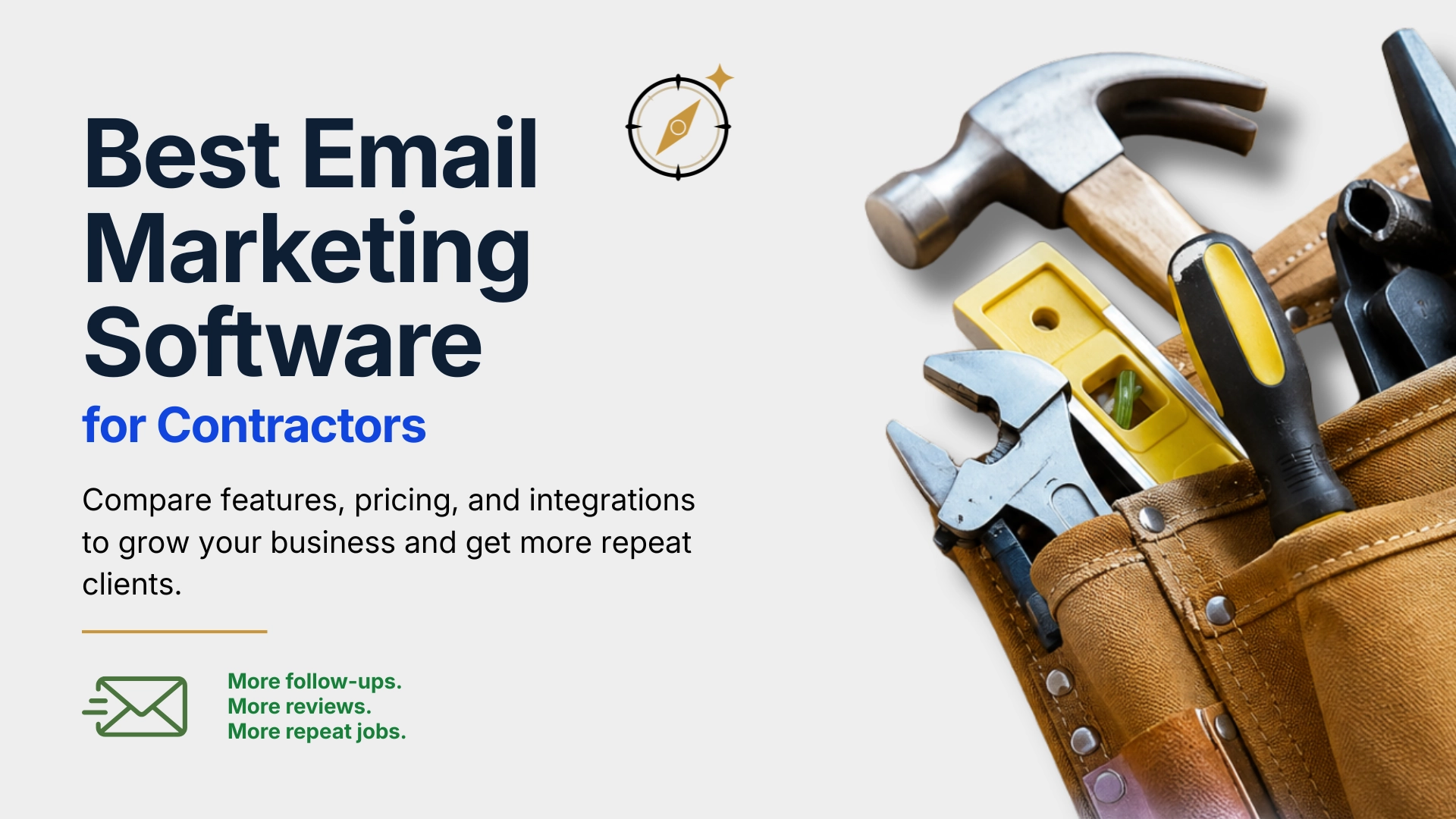
Best Email Marketing Software for Contractors (2026)
A practical comparison of Mailchimp, Constant Contact, Brevo, MailerLite, Kit, and field service marketing tools for contractors.
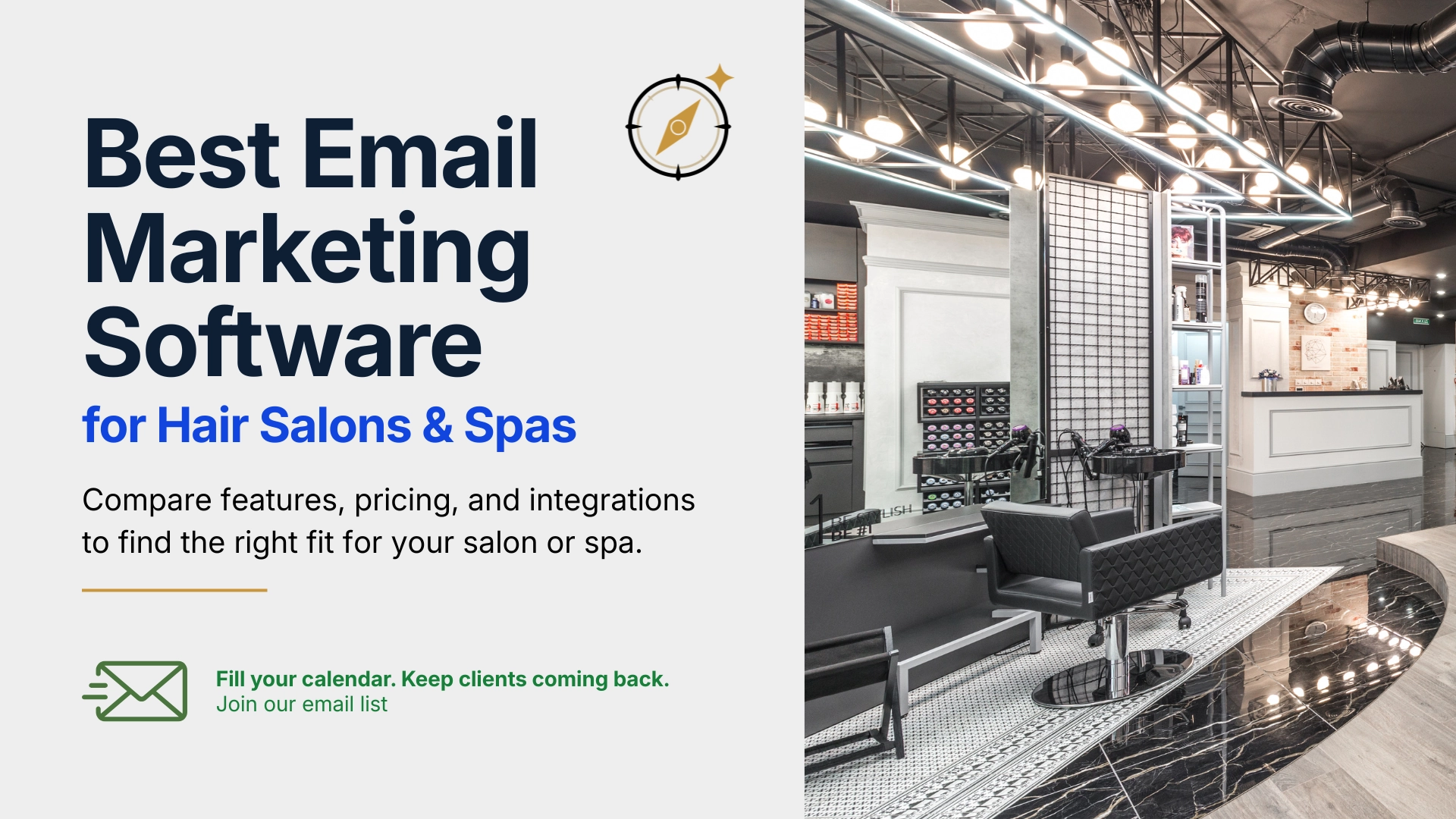
Best Email Marketing Software for Hair Salons & Spas (2026)
A practical comparison of Mailchimp, Constant Contact, Brevo, MailerLite, Kit, and booking-software marketing tools for salons and spas.
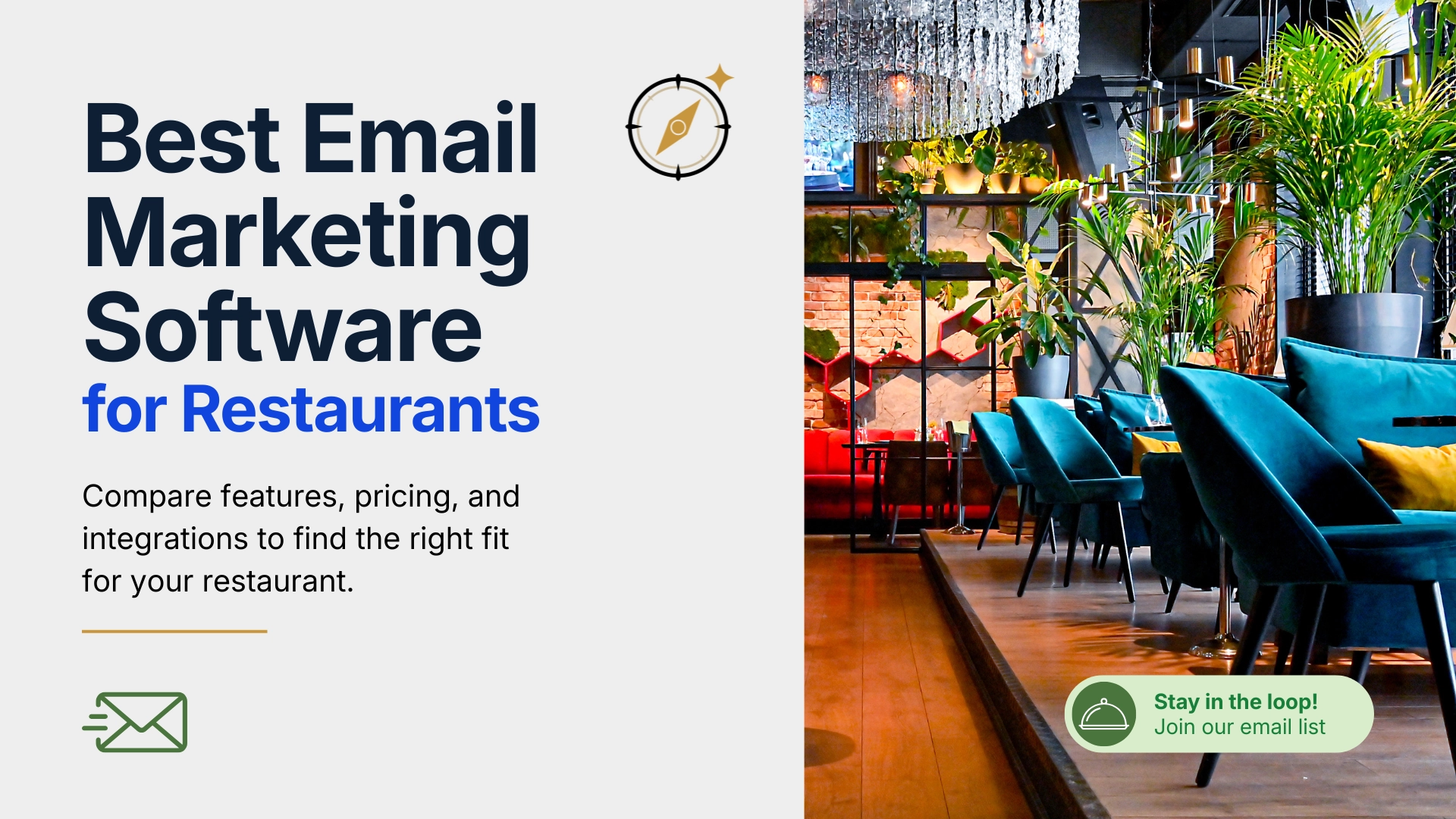
Best Email Marketing Software for Restaurants (2026)
A practical comparison of Mailchimp, Constant Contact, Brevo, MailerLite, Kit, and Toast Marketing for restaurant email marketing.